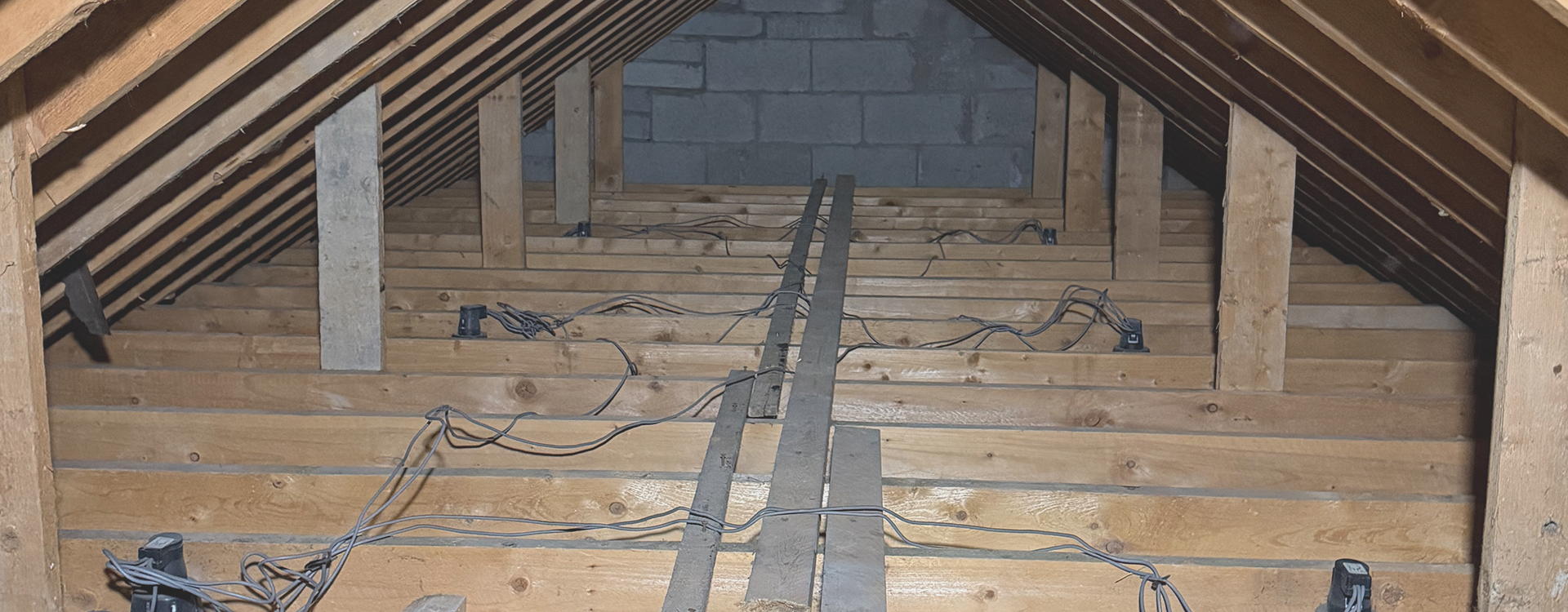
If you’ve ever pushed open an attic hatch and had a fine grey cloud drift down onto the landing, you’ve met attic dust. Most people sweep it up, close the hatch and forget about it. It’s worth knowing what that dust is made of, because the same material is reaching your bedrooms every day, just in smaller amounts you can’t see.
It isn’t ordinary household dust
Dust downstairs is mostly skin flakes, fabric fibres and whatever comes in on your shoes. Attic dust has a different recipe. When we vacuum out roof spaces around Dublin, what comes out of the filters is usually a mix of:
- Insulation fibres. Older mineral wool breaks down over time, and every time someone climbs over it or shoves a box onto it, short fibres are released. They’re itchy on skin and irritating to breathe.
- Mould spores. Even an attic without visible black patches can carry spores if it has had condensation problems in the past. They sit in the dust layer, dry and dormant, until they find moisture again.
- Pest debris. Dried droppings, nesting material and shed fur or feathers from mice, rats or birds. This is the part people least want to think about, and the reason we never recommend dry-sweeping an attic.
- Soot and old building dust. In houses with chimneys, or ones that have had renovations, a layer of fine grit settles on every flat surface and never gets disturbed.
- Dust mites and their waste, particularly where old bedding, carpets or soft furnishings have been stored.
How it gets from the attic into the house
Your attic and your bedrooms share air more than you’d think. Warm air rises, and a house is full of small gaps that let it move between floors: the edges of the hatch, recessed downlights, the holes where pipes and cables go through the ceiling, and the tops of internal walls in older homes.
On a cold, windy night, air pressure differences pull air back down through those same gaps. It’s a slow exchange, but it never stops. That’s why a dusty, musty attic so often shows up as a stuffy bedroom, a child whose cough is worse at night, or a smell in the wardrobe that comes back however often you wash the clothes.
Recessed spotlights are a common culprit in Dublin homes that were renovated in the 2000s. Many of them were fitted without fire hoods or seals, which means there’s an open path from the attic straight down into the room.
Who notices it most
Plenty of people live under a dusty attic for years without any obvious symptoms. The people who tend to feel it are:
- anyone with asthma, hay fever or a dust mite allergy
- babies and young children, especially in the smallest bedroom, which is often directly under the hatch
- older relatives who spend a lot of time indoors in winter
- people who work from a box room or converted bedroom upstairs
We’re not doctors, and if someone in the house has persistent breathing problems, the GP is the first call. But it’s reasonable to remove an obvious source of irritants from directly above where people sleep.
What you can do yourself
Some sensible steps don’t need a professional at all:
- Seal the hatch. A strip of draught excluder around the frame of the attic hatch is cheap and makes a real difference to both dust and heat loss.
- Check the downlights. If you have recessed lights in upstairs ceilings, an electrician can fit proper covers that stop air coming through.
- Don’t sweep. If you need to go up, move slowly and avoid stirring up the dust. Sweeping just puts it into the air.
- Get the cardboard out. Damp cardboard boxes feed mould and attract pests. Plastic crates with lids are a much better way to store things up there.
When it needs a proper clean
If the dust layer is thick, if there’s any sign of droppings, or if the insulation is visibly dirty, flattened or damp, the attic needs more than a tidy. A professional clean uses HEPA-filtered extraction, so the fine material is captured rather than spread through the house, and contaminated insulation is bagged and removed rather than disturbed and left behind.
At BioClean we follow up the vacuuming with bio-enzyme treatment and ozone disinfection to deal with odours and spores in the timbers, and we’ll tell you honestly if the insulation is worth keeping. You can read more about how we work on our attic cleaning page.
A quick test
Next time you open the hatch, shine a torch across the top of the insulation at a low angle. If you can see a grey film on it, or footprints and tracks you didn’t make, the dust has had years to build up. That’s usually the point to get someone in.
We cover all of Dublin and the surrounding counties. For a free quote, call or WhatsApp +353 85 735 7237 or get in touch through our contact page.