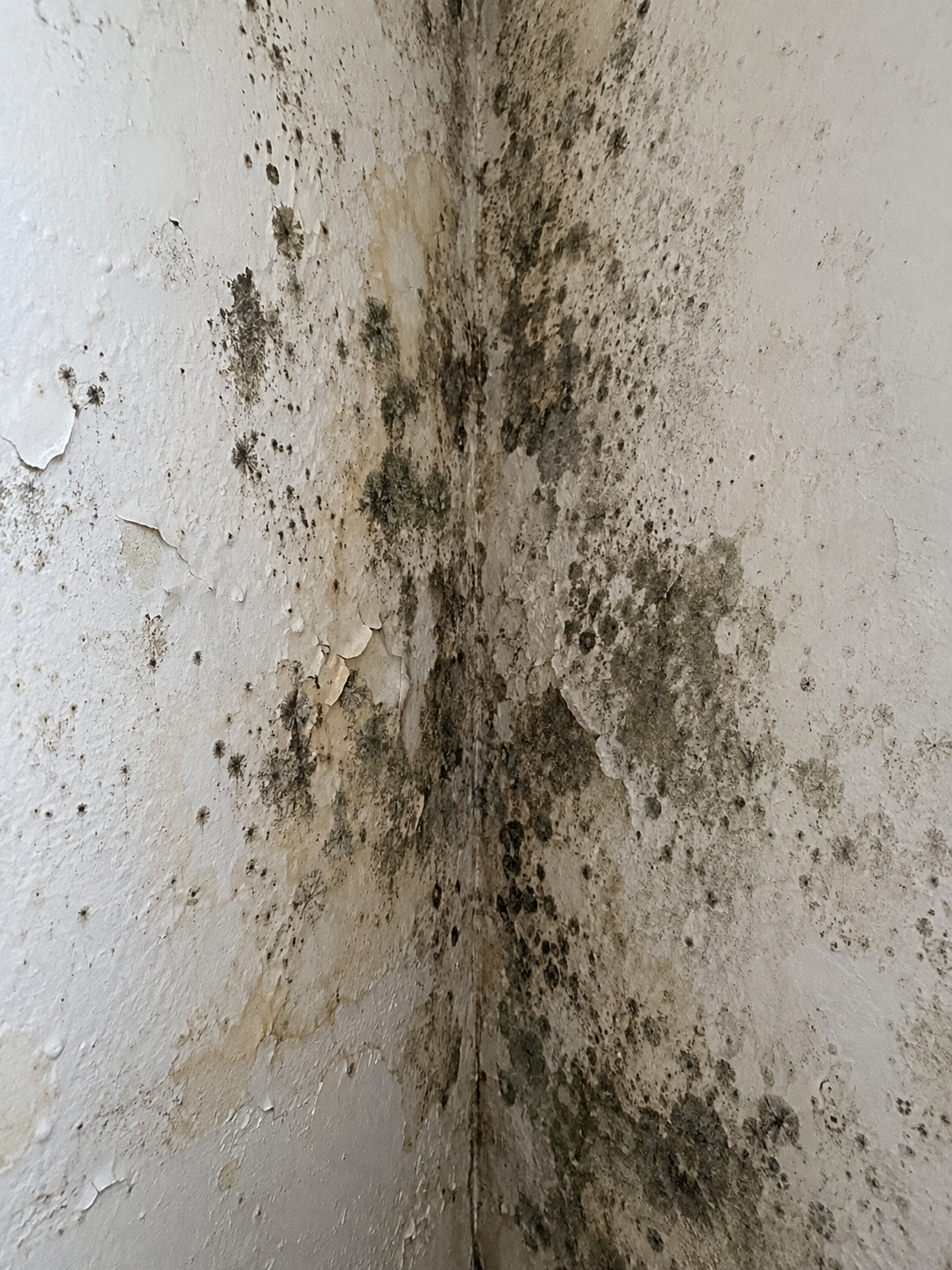
It usually starts as a faint grey shadow in the top corner of the room, where the ceiling meets the outside wall. By January it’s a cluster of black dots. You scrub it, it fades, and next winter it’s back in exactly the same place.
Bedroom mould is the call we get most often between October and March. It’s also the one people are most worried about, and with good reason: it’s the room where you spend eight hours a night breathing slowly with the door shut.
Why bedrooms get it worse than other rooms
An adult breathes out a surprising amount of water vapour overnight. Two people in a closed double bedroom add a noticeable amount of moisture to the air by morning, and if the room is cool and the window is shut, there’s nowhere for it to go. It condenses on the coldest surfaces in the room, which are almost always:
- the corner where two external walls meet
- the strip of ceiling along the outside wall, especially under an eave
- the wall behind a wardrobe or headboard
- window reveals and the area under the sill
Those spots are cold because heat escapes there faster, either through a gap in the insulation, a concrete lintel, or the edge of the attic where insulation doesn’t quite reach the wall plate. That last one is extremely common in Dublin semi-detached houses built between the 1960s and 1990s.
The attic connection
If your mould is on the ceiling rather than the walls, look up. Mould along the line where the bedroom ceiling meets the external wall is very often a sign that the attic insulation above it has slumped, been pushed back, or was never laid right into the eaves. That leaves a cold strip of ceiling, and the cold strip attracts condensation every night.
Cleaning the bedroom ceiling won’t fix that. Topping up and correcting the attic insulation at the edges usually will.
Why bleach doesn’t solve it
Bleach is good at removing the black colour. It’s much less good at killing mould that has grown into porous materials like plaster, paint and wallpaper paste, because it doesn’t soak in far enough. The surface looks clean, the roots underneath survive, and a few cold weeks later the spots return. Mixing bleach with other cleaning products is also genuinely dangerous, so please don’t.
What works
Lasting bedroom mould removal has three parts, and skipping any of them is why the problem keeps coming back.
1. Remove and treat the mould properly
Affected areas are cleaned with a professional fungicidal treatment that penetrates the surface, not just bleaches it. Badly affected wallpaper, silicone or soft furnishings may need to go. We follow up with disinfection to deal with spores in the air and on nearby surfaces.
2. Fix the cold spot or the moisture source
This might mean correcting attic insulation at the eaves, improving ventilation, sorting out a leaking gutter outside, or simply changing how the room is used. We’ll tell you what we think is causing it.
3. Protect the surface
Once the wall or ceiling is clean and dry, repainting with anti-mould paint gives the area a much better chance of staying clear through the next winter.
Habits that make a real difference
- Open the window a little at night if you can, or at least leave the trickle vent open.
- Keep the bedroom door ajar so air can move through the house.
- Don’t dry clothes in the bedroom, ever.
- Leave a gap of a few centimetres between furniture and external walls.
- Keep a low, steady background heat rather than letting the room go cold during the day.
- Open the curtains and blinds in the morning, and wipe any condensation off the glass.
When to get help
If the mould covers more than a small patch, comes back every year, smells strongly, or is in a child’s room, it’s worth having it looked at properly. We work all over Dublin, from Clontarf to Clondalkin and Dún Laoghaire to Dunboyne, and we can usually give a rough estimate from a few photos.
Call or WhatsApp +353 85 735 7237, or send us the details through our contact page.