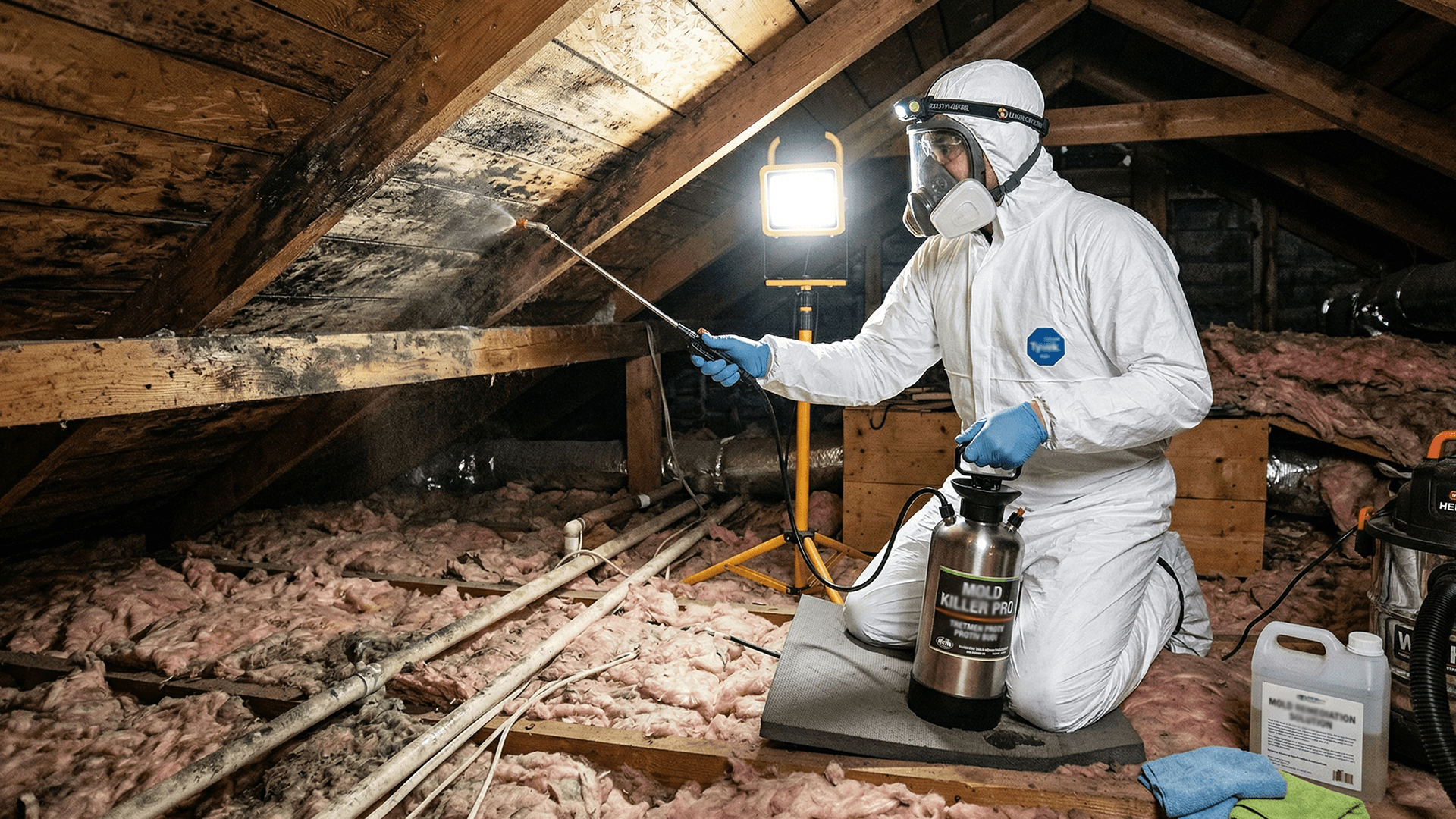
Attic mould is one of those problems that’s almost always found by accident. Someone goes up for the Christmas decorations, or an electrician pokes his head through the hatch, and there it is: black speckling across the underside of the roof, sometimes covering a whole slope.
It looks alarming, and it can be a real problem if it’s left. The good news is that it’s very treatable, and once the cause is fixed it generally stays fixed.
Where attic mould comes from
Mould needs three things: moisture, something organic to feed on, and still air. A Dublin attic in winter offers all three. The timber rafters and roof boards are food. The air is often still, because the eaves are blocked. And moisture arrives in two main ways.
Condensation from the house below
This is by far the most common cause. Warm, moist air from bathrooms, kitchens and bedrooms rises through the ceiling, through gaps around the hatch, light fittings and pipes, and reaches the cold underside of the roof. It condenses there, night after night, and the timbers stay damp for months at a time.
Leaks from outside
Slipped or cracked tiles, worn flashing around the chimney, a blocked valley gutter, or water backing up from overflowing gutters at the eaves. Leaks tend to produce mould in one concentrated area, often with visible water staining, rather than across a whole slope.
There’s a third factor that makes both worse: blocked ventilation. Many Dublin homes have had extra insulation added over the years, and quite often it has been pushed right into the eaves, covering the gaps that let air flow through the roof. The insulation keeps the house warmer, which is good, but it also makes the attic colder and stops it drying out, which isn’t.
Warning signs you can spot without going up
- a musty, earthy smell on the landing or in upstairs bedrooms, worst on cold mornings
- mould spots on bedroom ceilings near the outside walls
- upstairs allergies or stuffiness that ease off in summer
- water dripping from the attic hatch or ceiling fittings in very cold weather
- condensation you can see on the inside of skylights or roof windows
What you’ll see in the attic itself
Take a good torch. Look at the underside of the roof boards or felt and along the rafters, especially on the north-facing side. Attic mould typically shows up as:
- black or dark grey speckling, often heaviest near the eaves and the ridge
- white, fluffy growth on timber, which is also mould
- dark staining or tide marks on boards
- wet, clumped or discoloured insulation
- rusty nail tips poking through the roof boards, a sign of repeated condensation
If you’re unsure whether you’re looking at mould or just old timber discolouration, take a few photos and send them to us. We’re happy to give an opinion.
Is it dangerous?
Attic mould rarely threatens the structure of the roof in the short term. What it does do is release spores into the air that drifts back into the house, cause a persistent musty smell, and, over years, contribute to timber decay where the wood stays wet. For anyone with asthma or allergies, it’s worth treating sooner rather than later.
How attic mould is properly treated
Spraying the timbers with a supermarket product and walking away doesn’t work, because the conditions that grew the mould are still there. Our attic mould treatment deals with both the mould and the cause:
- Inspection to find out whether the moisture is coming from condensation, a leak, or both.
- Removal of contaminated insulation and debris, so we can reach the timbers and so spores aren’t left behind in the fibres.
- HEPA vacuuming of the timbers and boards to remove loose growth and spores.
- Professional anti-mould treatment applied to all affected surfaces.
- Ozone disinfection to reach behind rafters and into joints, and to deal with lingering odour.
- Fixing the cause. That might mean clearing the eaves, fitting roof vents, sealing gaps from the house below, or flagging a roof repair you need.
- Re-insulating with fresh insulation laid so it doesn’t block the airflow.
How to stop it coming back
Most of the prevention happens downstairs. Good extractor fans in bathrooms and the kitchen, a sealed attic hatch, and properly fitted downlights cut the amount of moisture reaching the roof dramatically. In the attic itself, the key is keeping the eaves clear so air can move, and not storing damp cardboard against the roof.
If you’ve found mould in your attic, or you suspect it from the smell, we cover all of Dublin and the neighbouring counties. Call or WhatsApp +353 85 735 7237 or send photos through our contact page for a free quote.